

Rome hides its darkest stories in its prettiest places. Cross Ponte Sant’Angelo on a summer evening — marble angels lining the bridge, the Tiber turning gold beneath it — and you are walking over one of the city’s most notorious execution sites. On 11 September 1599, a vast crowd packed this bridge to watch a twenty-two-year-old noblewoman kneel before the executioner. Her name was Beatrice Cenci, and Rome has never quite forgiven itself for what it did to her.
Who was Beatrice Cenci?
Beatrice Cenci was born in 1577 into one of Rome’s wealthiest aristocratic families. The Cenci name carried money, property and papal connections — and, behind the doors of its palazzo near the Jewish Ghetto, a great deal of cruelty. Her father, Count Francesco Cenci, was a violent and litigious man with a documented history of abuse and a talent for buying his way out of trouble. To the outside world he was untouchable. To his own family he was a tyrant.
A household ruled by fear
Francesco’s violence was an open secret. He had already been prosecuted more than once, yet his wealth kept him free. When his temper turned on his second wife, Lucrezia, and on Beatrice, he moved them out of sight — to the remote family fortress of La Petrella, high in the mountains of the Kingdom of Naples, where no neighbour would hear and no magistrate would come.
What happened there is the heart of the legend. Contemporaries spoke of imprisonment, beatings and sexual abuse. Beatrice is said to have appealed for help to anyone who might listen. No help came. A powerful man could do as he pleased inside his own walls, and the authorities looked away.
The murder at La Petrella
In 1598, the family stopped waiting for rescue. Beatrice, her stepmother Lucrezia and her elder brother Giacomo resolved to kill Francesco themselves. With the help of two servants — one of them, Olimpio, reputedly close to Beatrice — they drugged the count and killed him in his bed, then threw his body from a balcony to make it look like an accidental fall.
It very nearly worked. But the wounds did not match a simple fall, suspicion hardened, and under interrogation the plot came apart. The whole household was arrested and brought back to Rome to stand trial.
Trial and the Pope’s verdict
The Cenci trial gripped the city. Almost everyone knew what Francesco had been, and public sympathy for Beatrice was overwhelming — here, surely, was a daughter driven to the unthinkable by a monster. Lawyers argued the abuse in open court. Rome expected mercy.
Mercy did not come. Pope Clement VIII refused to pardon the family. Whether from a determination to uphold the sanctity of the father’s authority — or, as cynics whispered, because the estates of executed criminals could pass to the Church — the sentence was death. Beatrice, Lucrezia and Giacomo were condemned.
Execution at Ponte Sant’Angelo
On the morning of 11 September 1599, the family was led out to Ponte Sant’Angelo, in the shadow of Castel Sant’Angelo. Lucrezia was beheaded first, then Beatrice. Giacomo was given the worst death of all, bludgeoned and his body quartered. Only the youngest brother, Bernardo, was spared — and then forced to watch the others die before being sent to the galleys.
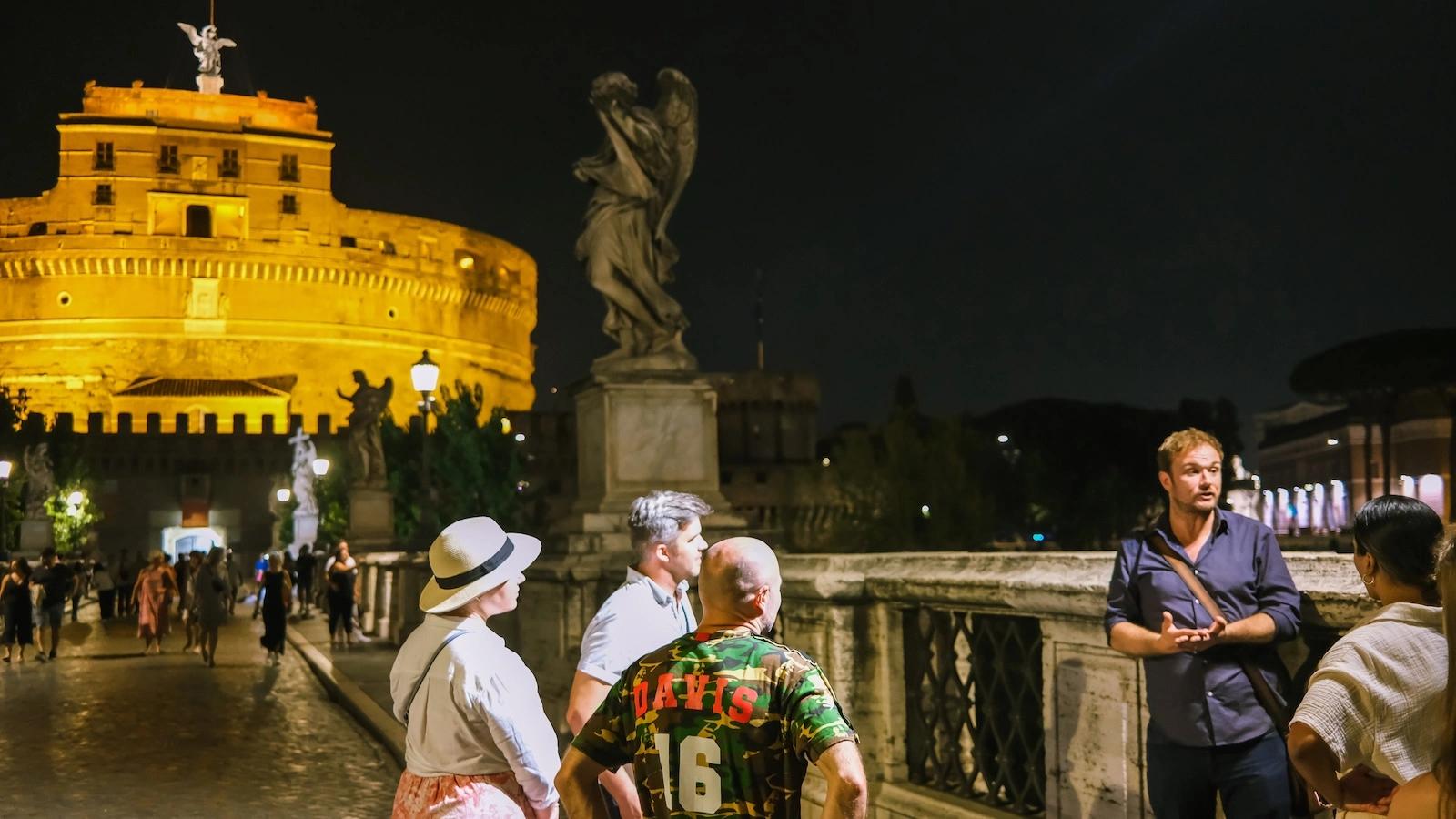
This same stretch of riverbank stayed Rome’s stage for public death for centuries. It is where the city’s most famous executioner, Mastro Titta, would later carry out hundreds of executions of his own. Ponte Sant’Angelo has soaked up more history than any bridge should have to.
The ghost of Beatrice Cenci
Legend says Beatrice never truly left. Every year, on the night of 11 September, she is said to return to Ponte Sant’Angelo — a pale figure in white, carrying her own severed head across the bridge where she died. It is one of Rome’s most enduring hauntings, and one of many reasons the city’s river district feels the way it does after dark. If you want to understand why, start with Is Rome Haunted?
A symbol that outlived her
In death, Beatrice became something larger than herself: a folk symbol of the powerless standing up to the powerful. Her story inspired Shelley’s verse drama The Cenci, along with work by Stendhal, Dumas and Artaud, and a mournful portrait long attributed to Guido Reni. She belongs to Rome’s long history of women crushed — or armed — by a world stacked against them, like the poisoner Giulia Tofana, or the free-thinker burned a year later in Campo de’ Fiori, Giordano Bruno.
Walk where it happened
Ponte Sant’Angelo looks serene by day. After dark, once you know the story, it changes. We stop here on our Rome Ghost Tour, where the angels on the bridge take on a different meaning and Beatrice’s story lands the way it should — on the exact spot where a grieving city watched a young woman die.
Beatrice Cenci FAQ
Who was Beatrice Cenci?
Beatrice Cenci (1577–1599) was a young Roman noblewoman who, with her stepmother and brother, murdered her abusive father, Count Francesco Cenci. She was tried and executed in Rome in 1599 and became a lasting symbol of resistance to tyranny.
Why was Beatrice Cenci executed?
She was convicted of the murder of her father. Despite widespread public sympathy and evidence of his abuse, Pope Clement VIII refused a pardon, and Beatrice, her stepmother Lucrezia and her brother Giacomo were sentenced to death.
How did Beatrice Cenci die?
She was beheaded on 11 September 1599 at Ponte Sant’Angelo in Rome, in front of Castel Sant’Angelo. Her stepmother was also beheaded and her elder brother was bludgeoned to death; her youngest brother was spared but made to watch.
Did Beatrice Cenci kill her father?
Yes. In 1598 Beatrice, her stepmother and brother, aided by two servants, drugged and killed Count Francesco Cenci at the family fortress of La Petrella, then staged it as a fall. Most accounts frame it as an act of desperation after years of abuse.
Where was Beatrice Cenci executed?
At Ponte Sant’Angelo, the bridge leading to Castel Sant’Angelo in Rome — for centuries one of the city’s main sites of public execution.
Does Beatrice Cenci’s ghost haunt Rome?
According to Roman legend, her ghost appears on Ponte Sant’Angelo each year on the anniversary of her death, 11 September, carrying her severed head. You can hear the full story on our Rome Ghost Tour.